
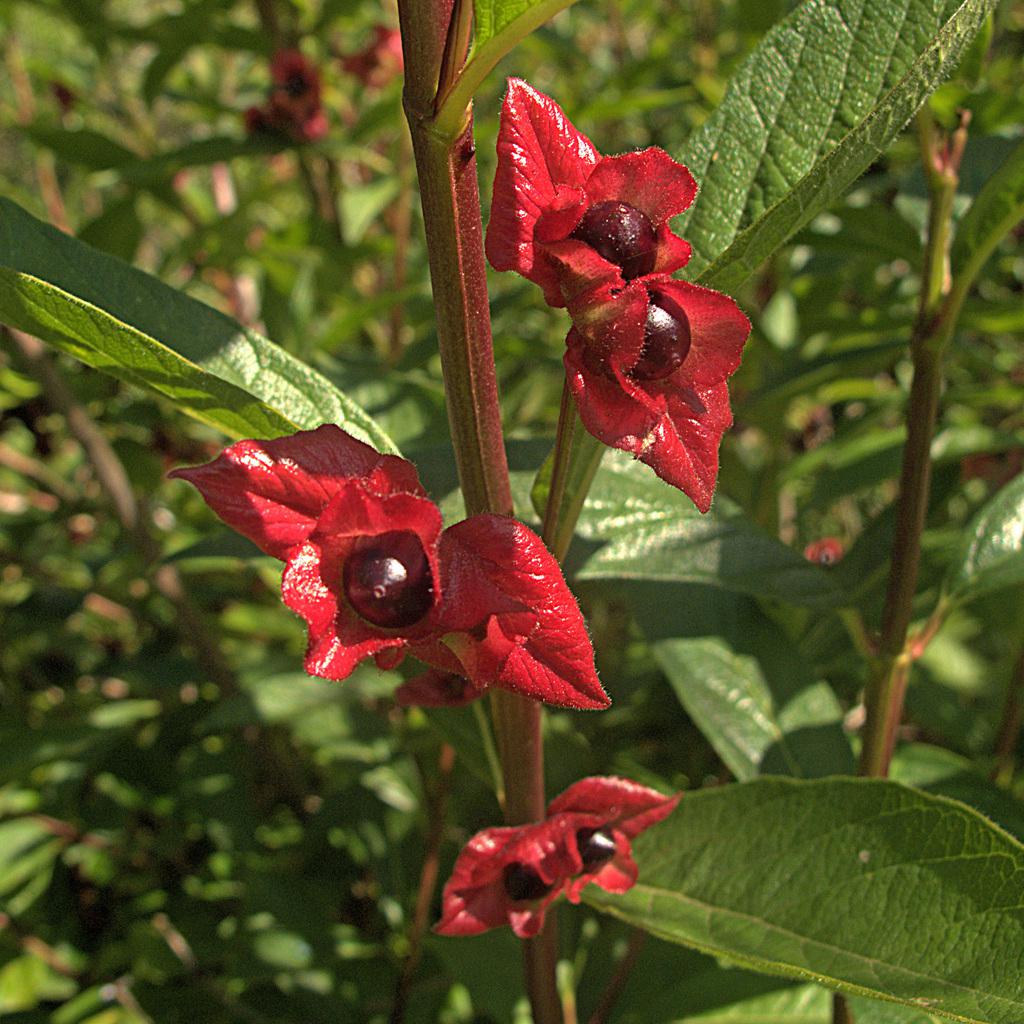
Bracted Honeysuckle, Black Twinberry Honeysuckle
Twinberry Honeysuckle are upright, bushy shrubs (4-12 ft) that grow in moist, shady places throughout the western United States and Canada. They tolerate wet soil and play an important role in wetland restoration projects as their strong root system stabilizes slopes, river banks, and shorelines.
Twinberry Honeysuckle have small, tubular yellow flowers that bloom in pairs from June to July. They develop into pairs of shiny black berries cupped by purple-red bracts.
The bright green oval-shaped leaves (.75-1.5 in wide) are hairy along the edges and underside.
Bears, small animals, and birds eat the berries, while the flowers are an important source of nectar for hummingbirds, butterflies, and moths. Deer graze on the twigs and leaves.
Did you know? Indigenous peoples of North America used the berries to dye hair and other materials.
See Also: Twining Honeysuckle