Douglas Hawthorn, Douglas' Thornapple
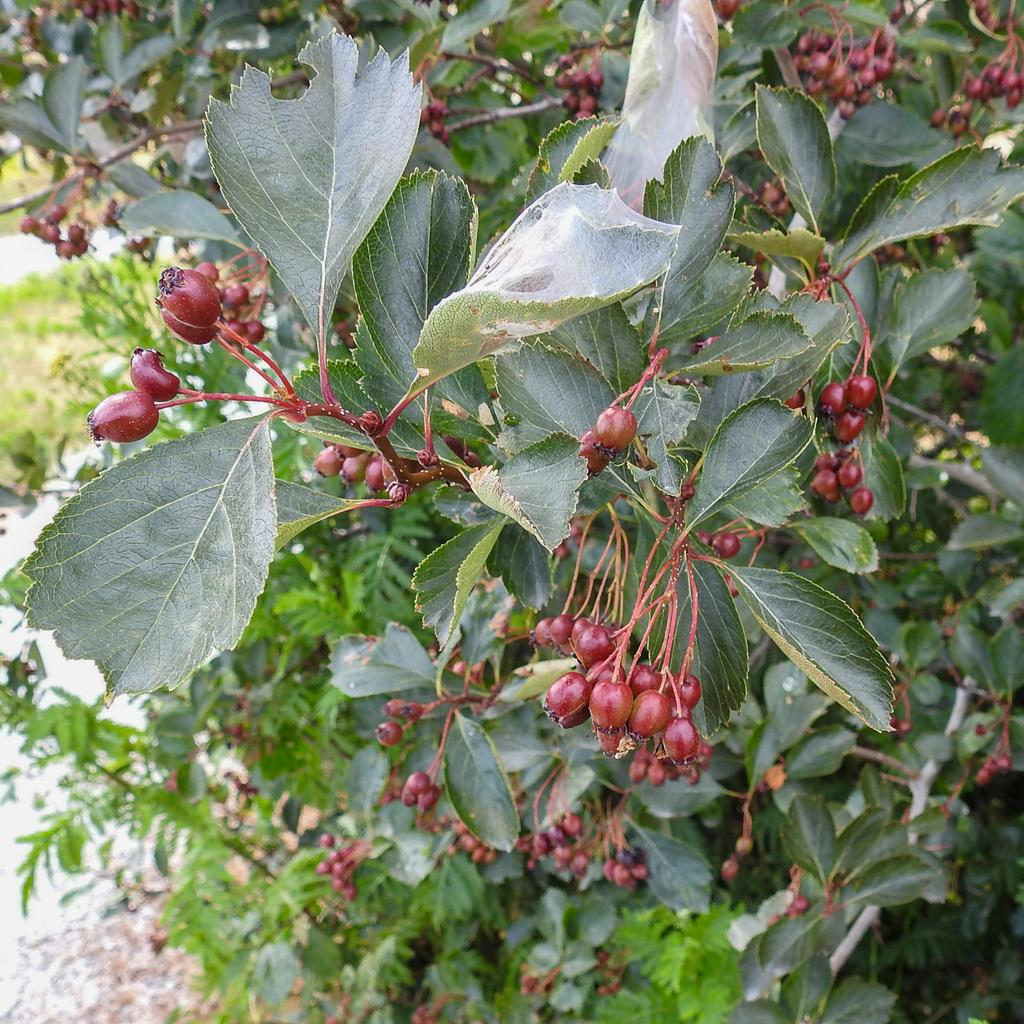
A large shrub or small tree (up to 35’) with a compact rounded crown, Black Hawthorns are found in northern and western North America. They are most common in the Pacific Northwest. They can be found at lower elevations in forests, along rivers, and on hillsides.
The branches have sharp thorns up to 1 in long. The oval, toothed leaves turn bright red in the fall. Black Hawthorns have clusters of white flowers that develop into small reddish-purple to black fruit. The berries contain large seeds and remain on the tree over the winter.
Birds and mammals eat the berries, while butterfly larvae of several different species munch on the leaves. The flowers attract a wide diversity of native bees and Hoverflies.
Many varieties of hawthorn can be found in eastern North America. One example is Downy Hawthorn, which has fewer thorns and the fruit are light red or orange.
Did you know? Canada’s Indigenous tribes used the thorns as needles or to make fish hooks. The branches can be used to mend barbed wire fences.
See Also: Devil's Club